Headless where it earns its complexity
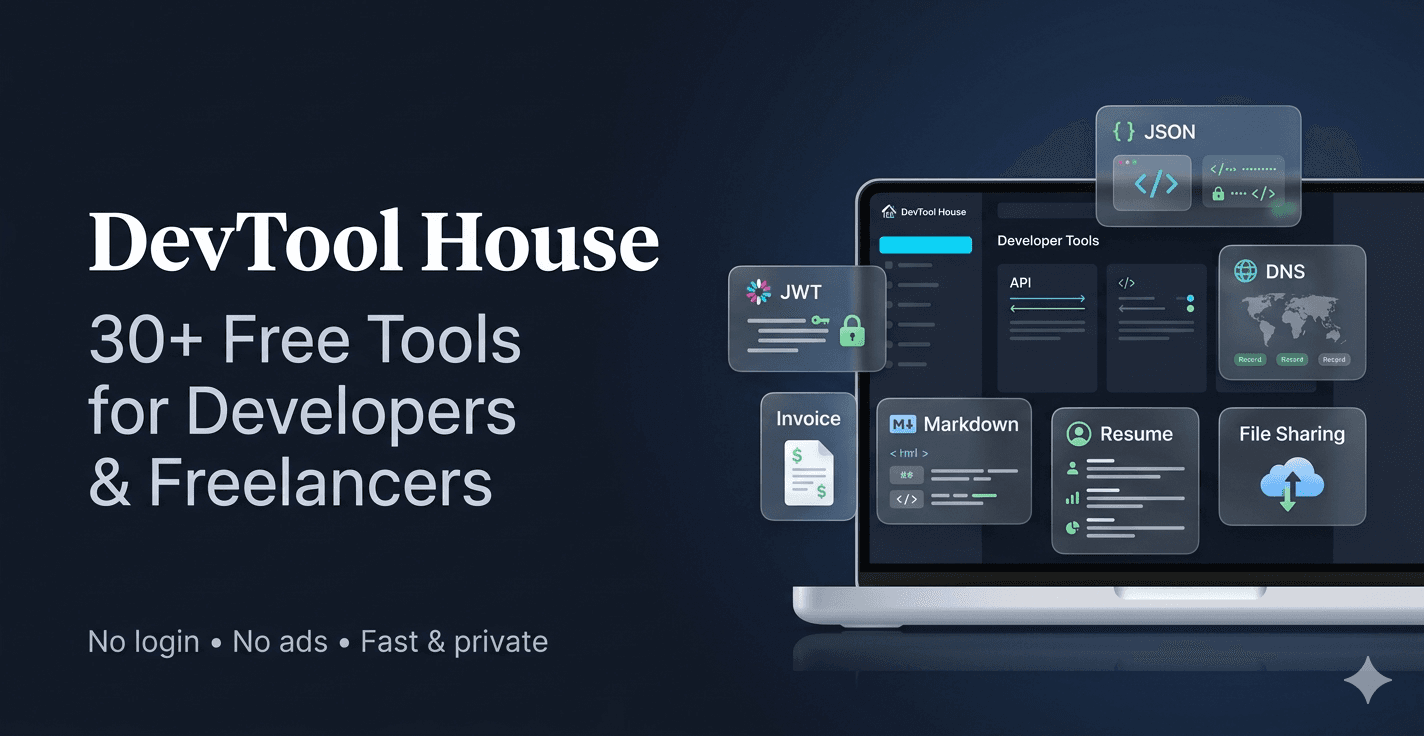
Decoupling the front end from the CMS buys flexibility and costs a build pipeline, an API layer, and a team that can maintain both — worth it when a template genuinely can't do the job, a bad trade when the site is mostly pages and posts. We build on Next.js where that complexity earns its place, and say so plainly when a conventional CMS build is honestly the faster, cheaper answer. It's the stack behind our own site, Theraphy360, and DevTool House — 32-plus open-source developer tools built and open-sourced independently by one of our engineers.
Trusted by



Best for teams whose front end has outgrown what a CMS template can give it.
When is the perfect time for Headless & Next.js?

A template can't produce the interface
The front end needs an interaction model — real-time updates, complex client-side state, an app-like flow — that no CMS theme is built to handle.

Content needs to serve more than one surface
The same content needs to reach a website, an app, and maybe a partner integration, and a traditional CMS template only ever served the one.

Front-end performance has plateaued
Page speed and Core Web Vitals have stalled inside what the current CMS theme and plugin stack can deliver, and further gains need a different rendering approach.

The CMS and the front end are pulling apart
Design and engineering want to iterate on the front end faster than CMS template constraints and release cycles allow.

A new product-like site is being planned
What's being built behaves more like an application than a brochure site, and the team wants that decision reflected in the architecture from the start.

Two teams, one release process
Content and engineering changes currently have to ship together through the same CMS release process, even though they change at different speeds.

Catalyze your Digital Journey to Success
Our Headless & Next.js engagement is built to help you make informed decisions and move with confidence.
Years of Experience
Projects Delivered
Client Satisfaction

How We Approach Headless & Next.js
Your Path to Operational Success

Our Experts align your business goals with user needs to achieve better results.
Assess the front-end requirement
We look at what the interface actually needs to do and whether a CMS template can do it, before assuming headless is the answer.
Design the API layer
The connection between the CMS — WordPress, Drupal, or a custom backend — and the front end gets designed so content stays editable without exposing implementation details it shouldn't.
Build the Next.js front end
The front end gets built against that API, with rendering strategy chosen per page based on how often its content actually changes.
Deploy and hand over both systems
CI/CD, monitoring and documentation cover the full stack, so your team can maintain the CMS and the front end as the two connected systems they are.
Business Outcome
- A front end that can do what the interface needs, not what a template allows.
- Content reused across a website, an app, or a partner integration from one backend.
- Front-end and content releases that no longer have to ship together.
- Performance gains past what a CMS theme could reach on its own.
- A CMS backend — WordPress, Drupal, or custom — kept editable for non-technical users despite the custom front end.
What Headless & Next.js Covers
Key Technologies We Work With
We leverage cutting-edge technologies to build scalable and robust digital solutions

Next.js

React

TypeScript

Tailwind CSS

HTML5

CSS3

JavaScript
Who Can We Engage?

Startups
Teams who need to prove something works before it is funded, and who cannot afford to spend the runway finding out late.

Enterprises
Organizations with systems they cannot switch off, where new capability has to arrive alongside what is already running.

Product Teams
In-house teams who need engineering capacity that carries context between sprints rather than rotating off the account.
Awards and Certifications
We are listed on the directories buyers check when shortlisting an engineering partner.
Clutch
GoodFirms
UpCity
DesignRush
TopDevelopers
TechReviewer
Our Partnerships
The cloud and hosting platforms we build, deploy and run on.

AWS

WP Engine

DigitalOcean
Coming soon
Google Cloud
Coming soonEngage & Acknowledge from the Digital Sphere

FAQS
Common questions about Headless & Next.js.
When the front end needs something a template can't do — an app-like interaction model, a highly custom interface, content served to more than one surface. A site that's mostly pages and posts is served just as well by a CMS theme, rather than the added build pipeline and second codebase headless requires.
Either. WordPress and Drupal both expose content through an API well enough to sit behind a Next.js front end — we build on both. A custom API backend is also an option when neither CMS fits the content model. The choice depends on who edits the content, not on the front end.
A second codebase, a build pipeline connecting the two, and a team able to maintain both sides — not just one. That's a real ongoing cost, not a one-time setup fee, and it's worth weighing honestly against what the custom front end buys you.
Yes — it's the same approach behind our own site, Theraphy360, and DevTool House, an open-source toolkit one of our engineers built and maintains independently. Running it ourselves is part of why we're specific about when the complexity is worth taking on.